Tell us about the job
Takes about a minute. No obligation.

Sizing a water heater in Faribault County means accounting for what the climate actually asks of the equipment, and the record here is real without being relentless. 58 severe weather events were recorded in Faribault County, Minnesota between 2015 and 2024. At that rate, severe weather is a recurring presence, not a dominant one. A contractor quoting a replacement will check installation quality, venting, and whether the existing unit was sized correctly for the household demand. Those factors drive most failures here. Weather load is part of the picture, but a unit that died young in this county more likely had a sizing or installation problem than a storm problem.
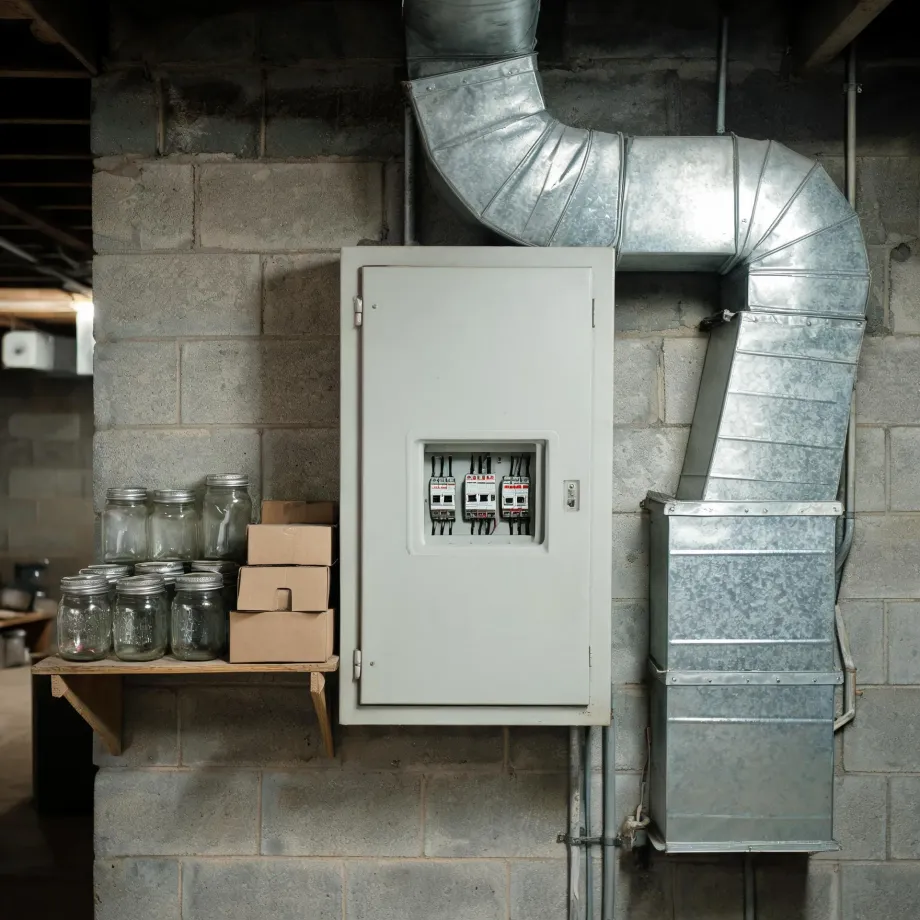
Ductwork in a house this old was built around equipment that has not been manufactured for generations. What runs through those pathways now is whatever successive owners put in, and a contractor quoting a new water heater has to open the question of whether the existing runs can carry the load before any other number on the estimate is reliable. Half the homes in Faribault County, Minnesota were built in 1952 or earlier (2020-2024 ACS 5-year). That gap between when the house was framed and what a modern unit asks of it is where installation work gets complicated, and it shows up in the ductwork first.
What a Water Heater Installation Covers
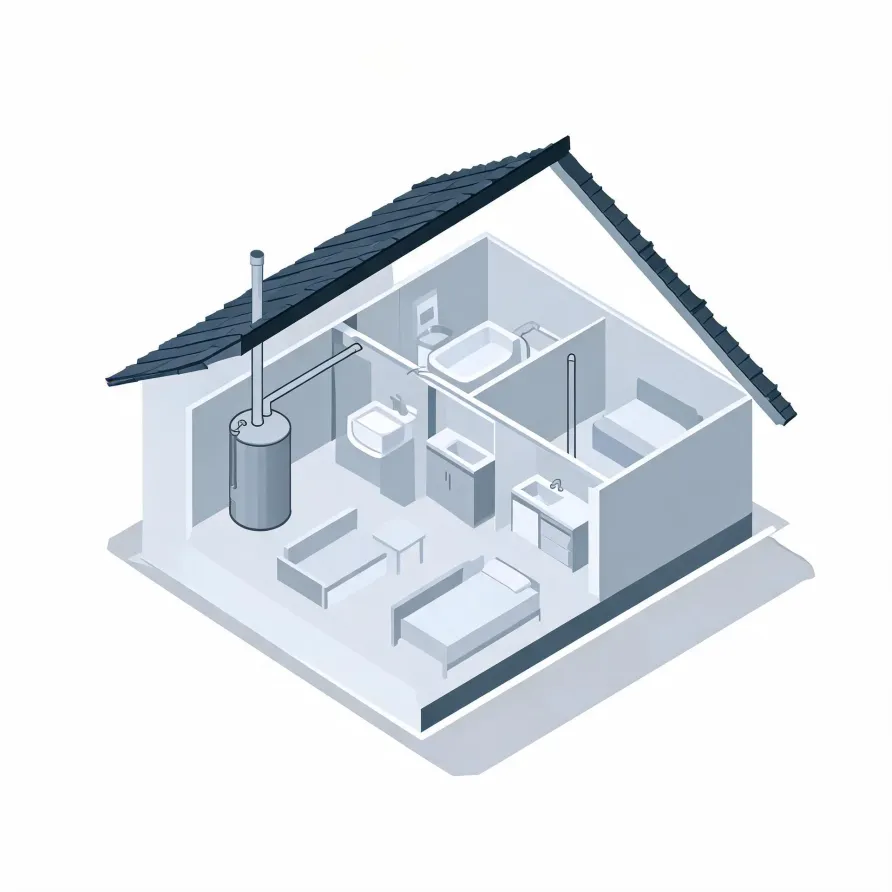
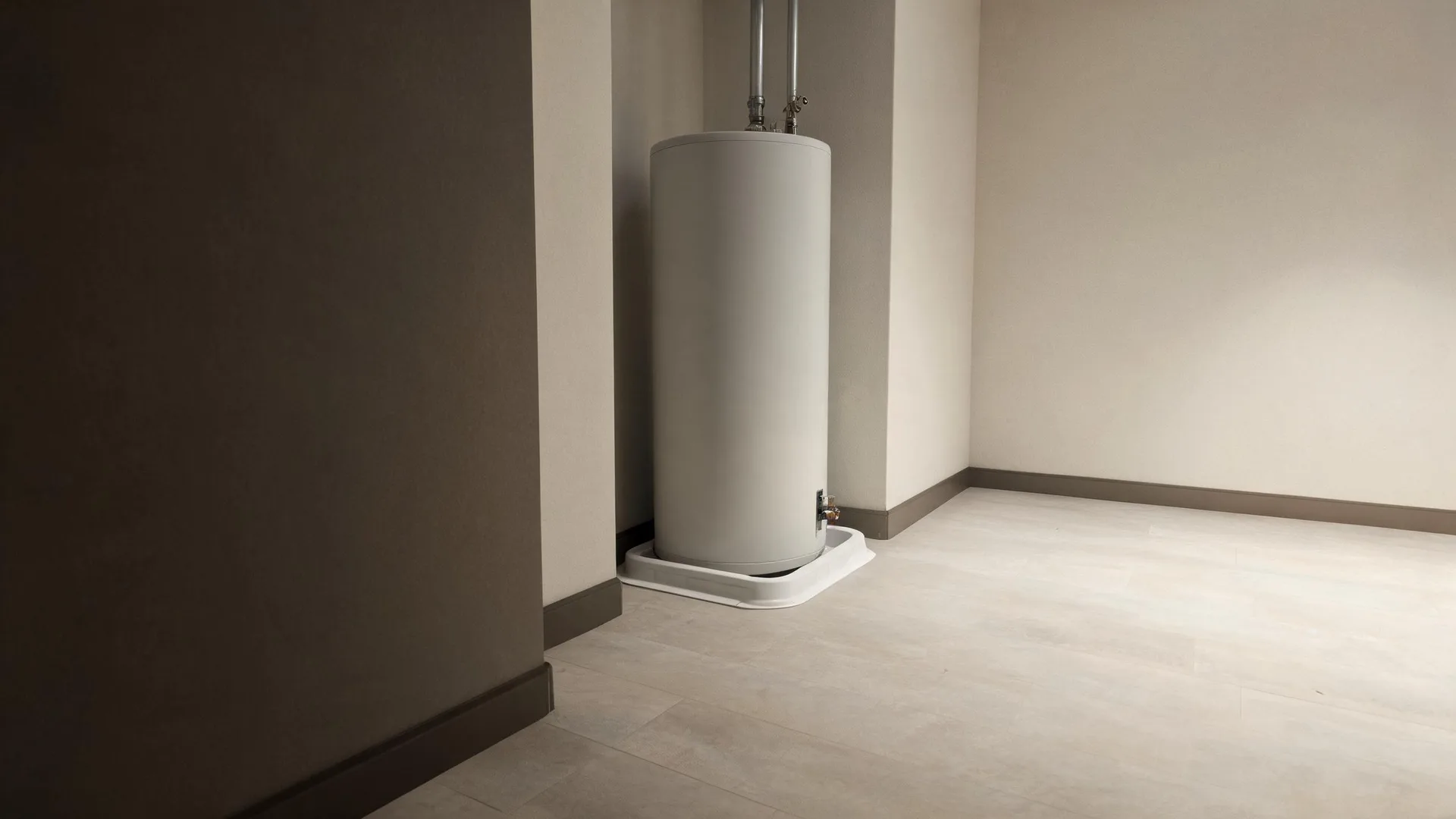
The tank or tankless unit is the centerpiece of the system, sitting in a utility room, basement, or garage, and its job is to hold and deliver hot water to every fixture in the house. A pressure relief valve mounts directly on the unit and releases if internal pressure climbs beyond a safe point.
Supply and return lines connect the unit to the home's plumbing, bringing in cold water and sending heated water out. A drain valve at the base of the unit and an anode rod inside the tank are also part of what a contractor sets up and positions during the installation.
The drawing shows a typical layout, and a licensed contractor determines exactly what applies to your house.
Get matched in Faribault CountyFaribault County by the numbers
58 severe weather events were recorded in Faribault County, Minnesota between 2015 and 2024.
NOAA National Centers for Environmental Information, Storm Events Database, bulk CSV export, events 2015-01-01 through 2024-12-31.Half the homes in Faribault County, Minnesota were built in 1952 or earlier (2020-2024 ACS 5-year).
U.S. Census Bureau, 2020-2024 American Community Survey 5-Year EstimatesFaribault County, Minnesota holds 6,897 housing units (2020-2024 ACS 5-year).
U.S. Census Bureau, 2020-2024 American Community Survey 5-Year EstimatesOwners occupy 79.2% of the occupied homes in Faribault County, Minnesota (2020-2024 ACS 5-year).
U.S. Census Bureau, 2020-2024 American Community Survey 5-Year EstimatesRules & Standards for Water Heater Installation in Faribault County, Minnesota2 sourced rules and standards
What Faribault County, Minnesota Requires for HVAC Installation
Minnesota defines a mechanical contractor as a business that installs, repairs or maintains heating, ventilating, cooling or refrigeration systems — the definition that carries the exemption from the residential contractor licence.
Minnesota's residential contractor licence does not reach HVAC work: the licensing section carries its own exemption list, and a mechanical contractor is exempt from the licence requirement by name.
Severe Weather Events in Faribault County
Minnesota weather puts real demand on water heating equipment, and Faribault County conditions shape how hard a system has to work and for how long. A water heater sized and installed for local conditions holds up better than one spec'd for somewhere else.
58 severe weather events, 2015–2024. Source: NOAA National Centers for Environmental Information, Storm Events Database.