Tell us about the job
Takes about a minute. No obligation.
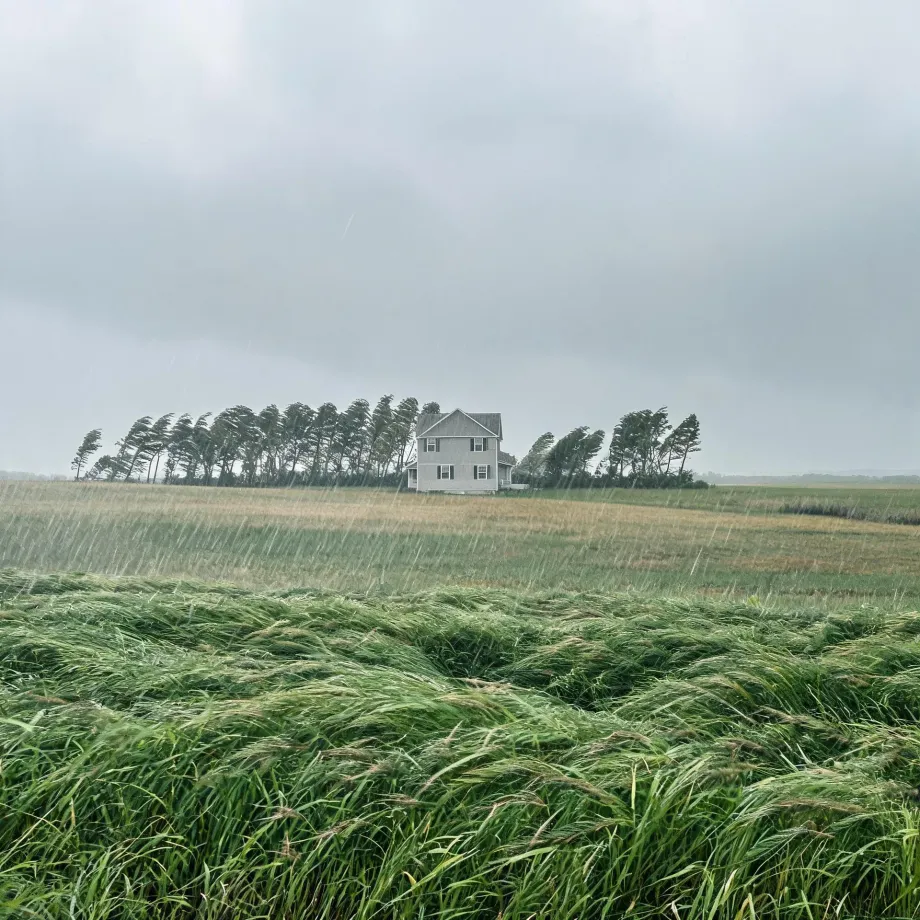
A contractor called out for water heater trouble in Swift County has to sort the probable causes before anything else, and the local weather record shapes that read only a little. 94 severe weather events were recorded in Swift County, Minnesota between 2015 and 2024. That puts severe weather in the moderate range for this area, real enough that a contractor keeps it in mind but not so heavy that storm load jumps to the front of the diagnosis. Sediment accumulation, a corroded anode rod, and years without a flush are what show up most often in a failed unit here.
A water heater sitting in a house built before mid-century has usually outlasted its original installation by at least one replacement cycle, and what a contractor finds when the unit comes apart reflects that history: scale on the heat exchanger, a sacrificial anode worn to nothing, fittings that have been hand-tightened past the point of a clean seal. Half the homes in Swift County, Minnesota were built in 1958 or earlier (2020-2024 ACS 5-year). That depth of accumulation means parts tell the real story, and whether what is needed is still manufactured for a system of that configuration is the question that shapes the repair bill more than the labor does.
The Parts of a Water Heater a Contractor Checks During a Repair
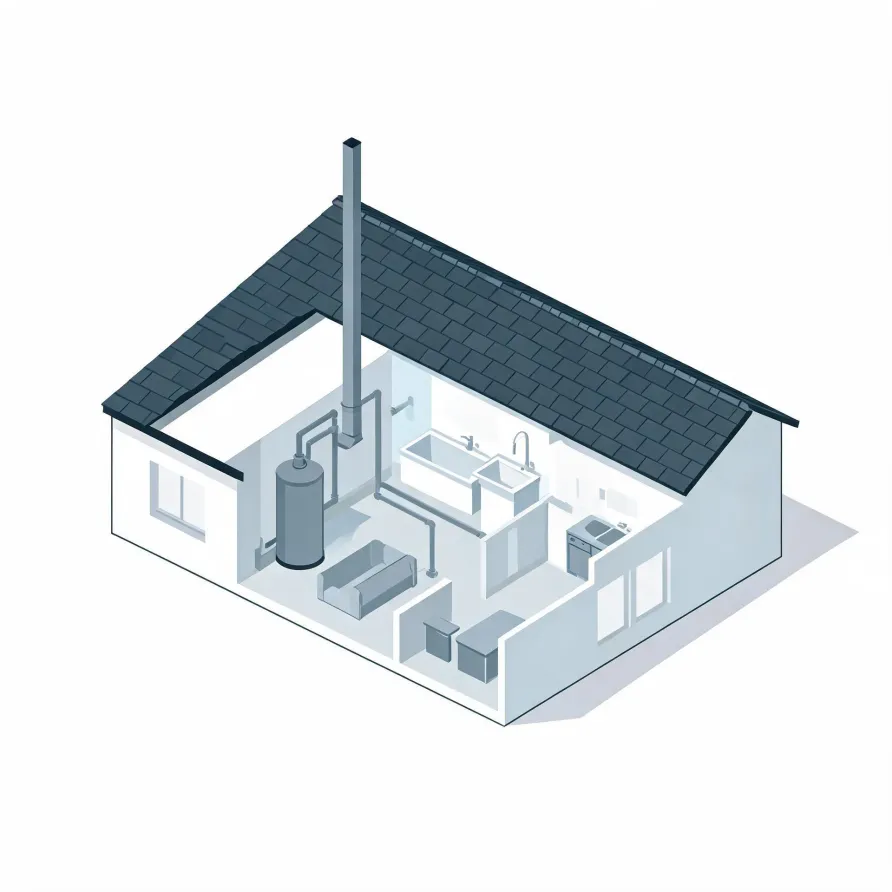
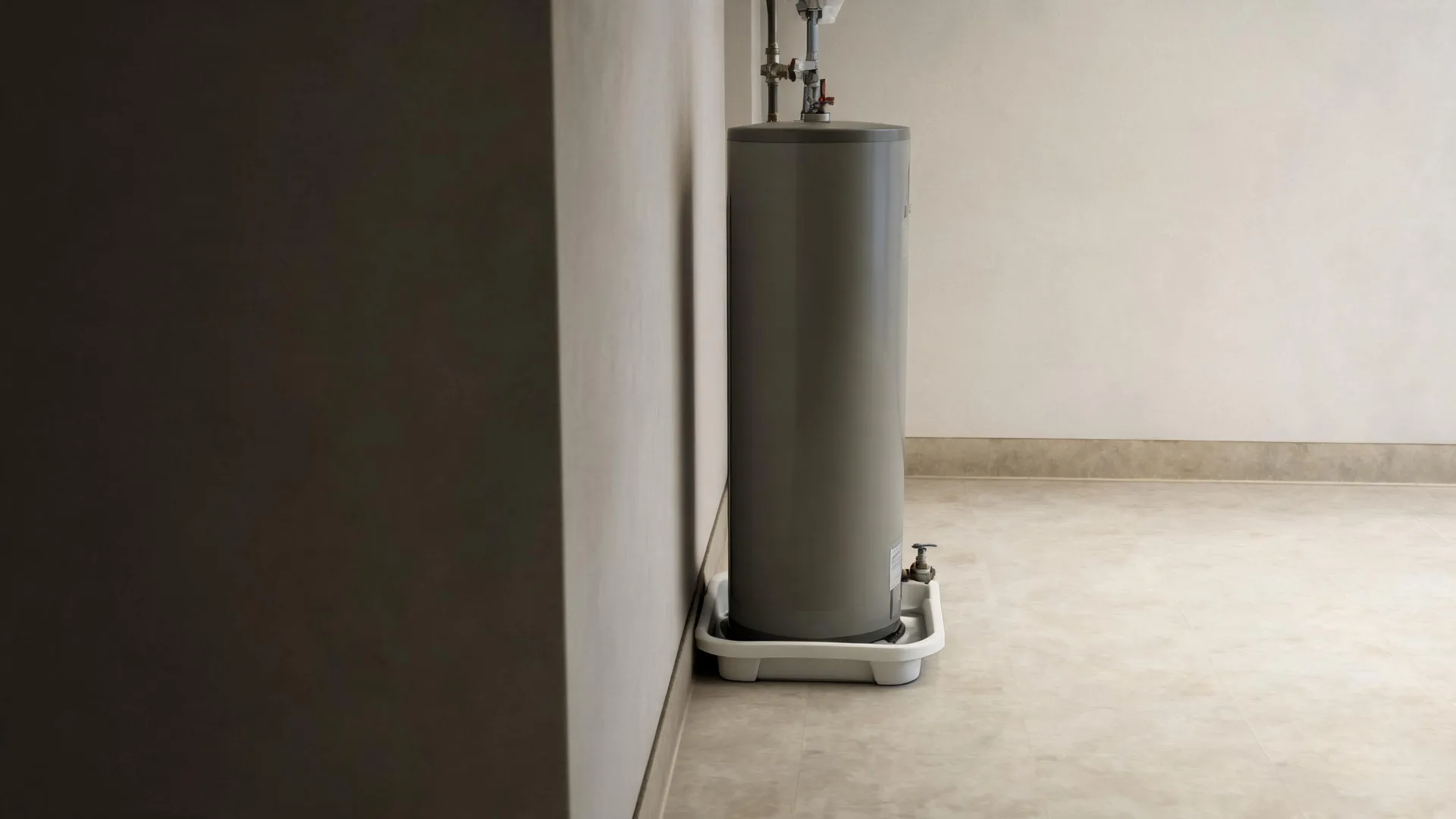
The tank is what most homeowners think of first: a large insulated cylinder that sits in a utility room, garage, or basement and holds a standing supply of hot water. Attached to it are the cold-water inlet and hot-water outlet connections, the pressure relief valve on the side, and the anode rod inside, which draws corrosion away from the tank wall. When a repair call comes in, these are among the first things a contractor looks at.
The burner assembly or heating element sits at the base or inside the tank depending on whether the unit runs on gas or electricity, and the thermostat mounted to the outside controls when and how hard that heat source runs. A gas unit also has a flue pipe running up through or out of the unit that carries combustion exhaust away from the living space. The drain valve near the bottom of the tank gives a contractor access to the interior during diagnosis.
The drawing shows a general layout of these components, and a licensed contractor determines which parts apply and what condition they are in for the specific unit in your home.
Get matched in Swift CountySwift County, Minnesota, by the numbers
94 severe weather events were recorded in Swift County, Minnesota between 2015 and 2024.
NOAA National Centers for Environmental Information, Storm Events Database, bulk CSV export, events 2015-01-01 through 2024-12-31.Half the homes in Swift County, Minnesota were built in 1958 or earlier (2020-2024 ACS 5-year).
U.S. Census Bureau, 2020-2024 American Community Survey 5-Year EstimatesSwift County, Minnesota holds 4,706 housing units (2020-2024 ACS 5-year).
U.S. Census Bureau, 2020-2024 American Community Survey 5-Year EstimatesOwners occupy 72.4% of the occupied homes in Swift County, Minnesota (2020-2024 ACS 5-year).
U.S. Census Bureau, 2020-2024 American Community Survey 5-Year EstimatesCodes & Standards Covering Water Heater Repair in Swift County, Minnesota2 sourced rules and standards
Licensing and Legal Requirements in Swift County, Minnesota
Minnesota defines a mechanical contractor as a business that installs, repairs or maintains heating, ventilating, cooling or refrigeration systems — the definition that carries the exemption from the residential contractor licence.
Minnesota's residential contractor licence does not reach HVAC work: the licensing section carries its own exemption list, and a mechanical contractor is exempt from the licence requirement by name.
Severe Weather Events in Swift County
Extreme weather puts water heaters under real strain, pushing tanks, connections, and relief valves to work harder than they would in mild conditions. How often that happens in Swift County shapes what local units go through and what repair work they tend to need.
94 severe weather events, 2015–2024. Source: NOAA National Centers for Environmental Information, Storm Events Database.